Vacancy rates reflect Manila mayoralty politics guide
"The landscape of urban governance is often a reflection of shifting political tides and administrative priorities."
Manila mayoralty politics and regional governance strategies shape the physical and economic reality of the metropolitan area. This overview examines how administrative shifts influence development and the varying vacancy rates across different business districts.
Key takeaways include the impact of regional administration proposals, the status of reclamation projects, and current commercial vacancy trends.
How do regional administrative shifts affect Manila mayoralty politics?
In the quiet office, a weary politician stares at the empty chair, feeling the cold air as he contemplates the political vacancy left by the shifting administration.
A legislative officer reviews a draft of a 2014 bill on a wooden desk. In 2014, a bill was introduced proposing the creation of a new governing body in Metro Manila, known as the Metropolitan Manila Regional Administration (MMRA).
This proposal sought to centralize oversight to better manage urban sprawl and infrastructure.
Such a shift in governance would have fundamentally altered how the city handles local policy. While the MMRA remained a proposal, the discussion surrounding it highlights the complexities of managing a massive metropolitan area.
Effective urban management changes often depend on whether authority is centralized or distributed among local leaders.
The debate over regional administration reflects broader questions about how leadership affects city development. Political urban planning often involves navigating these overlapping jurisdictions.
Without a unified body, coordinating large-scale projects across multiple cities remains a significant challenge for local leaders.
What is the status of major reclamation and development projects?
An engineer examines a blueprint for a coastal expansion project.
This specific project represents one of the few approved efforts to expand the city's footprint through reclamation.
The approval process for such projects involves rigorous regulatory oversight to balance economic growth with environmental concerns. While the scheduled construction was set for 2021, the timeline for such massive undertakings often shifts due to various administrative factors.
Development under different leaders can lead to changes in which projects receive priority or funding.
These large-scale developments are intended to create new economic hubs. However, the success of these projects depends on long-term stability and consistent policy application. The interplay between government approval and actual construction remains a central theme in Manila's expansion history.
How do vacancy rates reflect current urban management changes?
The agent walks through the silent, hollow office at noon, feeling the sudden chill of the air conditioning while she surveys the unsettling vacancy of the empty room.
A real estate agent walks through an empty office space in a high-rise building. Current commercial trends show significant variance across the metropolitan area. As of the end of 2024, the vacancy rate for Metro Manila shows a wide range of occupancy levels across different districts.
The data reveals specific economic pressures in different sectors of the city. For instance, the Makati Central Business District maintained an 8.3% vacancy rate. In contrast, the Makati Fringe area showed a significantly higher vacancy rate of 35.9%.
| District | Vacancy Rate (End of 2024) |
|---|---|
| Makati Central Business District | 8.3% |
| Makati Fringe | 35.9% |

The difference between these two areas illustrates how location and specific district characteristics influence commercial demand. These figures provide a snapshot of the economic vitality and space availability within the city.
Understanding these shifts is essential for analyzing the Mayor's impact on city economic health.
What are the different levels of commercial occupancy in the city?
A consultant compares data tables on a tablet during a meeting. Meanwhile, Fort Bonifacio sat at 17.2%, and Quezon City showed a 22.8% vacancy rate.
These numbers highlight the unevenness of growth across the metropolitan area. In the southern sectors, Alabang recorded a 32.5% vacancy rate, and the Bay Area reached 34.9%. Such disparities suggest that certain areas are experiencing much higher levels of available space than others.
This distribution of vacancy rates can indicate where businesses are concentrating their operations. It also shows how different zones within the metropolitan area respond to economic shifts. Managing these diverse zones requires nuanced urban planning and targeted economic policies.
How can administrative standards be applied to local development?
A policy analyst reads a manual on quality management systems. Standards are often developed through the adoption of international standards, such as ISO 9001, or through development with industry input to meet specific local economic needs.
Applying these standards to urban management can help streamline city operations.
When local governments adopt structured frameworks, it can lead to more predictable development outcomes. For example, aligning city planning with international quality management practices could theoretically improve the efficiency of public works.
This type of policy-driven growth is a key component of modern urban leadership.
The integration of industry needs into regulatory frameworks is another way to shape the city. By allowing for local economic specifics to be addressed within broader standards, leaders can foster more targeted growth.
This balance is vital for maintaining stability in a rapidly evolving metropolitan environment.
What are the limitations of current urban planning?
A city planner looks out over a crowded street from a high balcony. One significant limitation is that large-scale projects like Horizon Manila are subject to the approval of specific authorities, such as the Philippine Reclamation Authority.
This means that development is often contingent on specific regulatory decisions rather than just political will.
The reality of urban growth is often constrained by these administrative and legal boundaries. While the goal of expansion is clear, the execution is tied to the approval of specific entities and the timing of construction schedules.
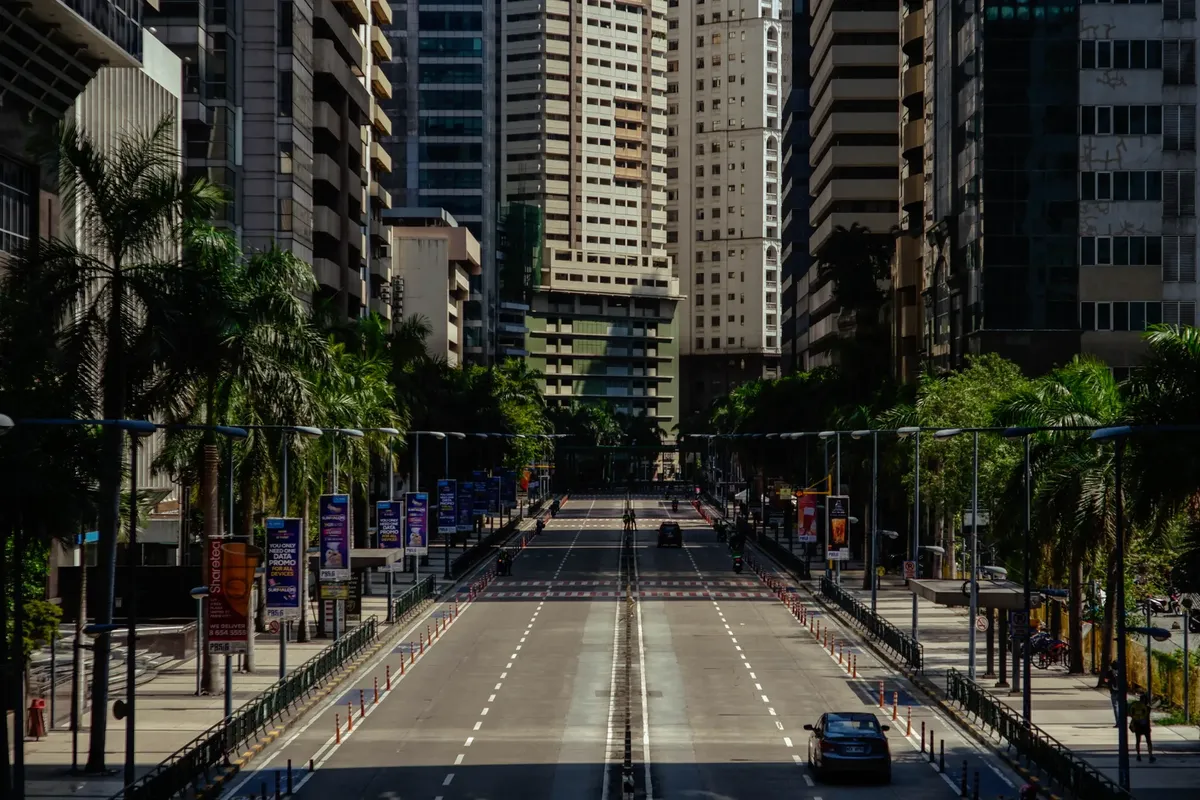
This reality limits the speed at which the city can physically expand.
The current state of the city's development is a mix of highly occupied central hubs and much more vacant peripheral areas. This imbalance remains a constant challenge for those managing the metropolitan area.
Wikipedia: Metro Manila Based on the retained excerpt mentioning Ortigas Center: As of end of 2024, the vacancy rate for Metro Manila are as follows: Makati Central Business District: 8.3%, Ortigas Center: 12.8%, Fort Bonifacio: 17.2%, Quezon City: 22.8%, Ortigas Fringe: 24.2%, Alabang: 32.5%, Bay Area: 34.9%, and Makati Fringe: 35.9%.
- How do regional administrative shifts affect Manila mayoralty politics?
- What is the status of major reclamation and development projects?
- How do vacancy rates reflect current urban management changes?
The subject here is Manila mayoralty politics.
Related






Comments 0